
Nuclear Physics
Understanding the Bohr Theory of the Hydrogen Atom
The Bohr Theory of the hydrogen atom is a fundamental concept in physics, explaining how electrons move around the nucleus in an atom. This theory was…

Clear explanations, formulas, diagrams and practical examples designed to make physics easier to understand.
Start with a subject and explore concepts, formulas and detailed explanations.
The Bohr Theory of the hydrogen atom is a fundamental concept in physics, explaining how electrons move around the nucleus in an atom. This theory was…

Introduction to Subatomic Particles Atoms are the fundamental units of matter, making up everything we see, touch, and interact with…

Steps to check a diode with a multimeter, follow these steps: Set the multimeter to diode test mode, represented by…

To understand how to characterize a voltage controlled current source (VCCS)? We must know about VCCS. Voltage-controlled current source (VCCS)…

When a part of output signal is fed back to the input of circuit through a suitable network, the process…

Hartley oscillator Definition Fig. 4 shows the circuit diagram of a Hartley oscillator using a transistor in C.E. configuration. In…

Construction of tuned collector oscillator It consists of a tank circuit or LC tuned circuit connected to the Collector of…

What is Operational Amplifier An operational amplifier (OP-AMP) is a very high gain differential Amplifier with high input impedance and…
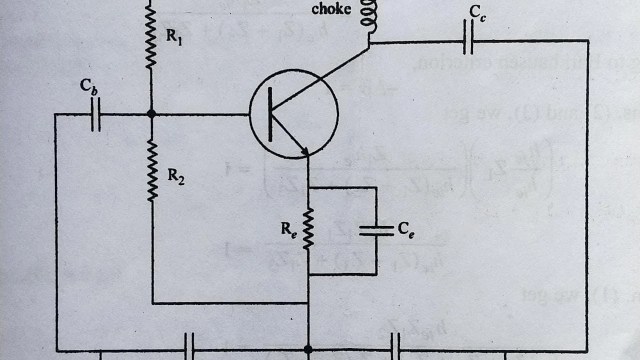
Fig. 6 Shows the circuit diagram of Colpitts oscillator. What is Colpitts Oscillator? In this oscillator, tank circuit consists of…
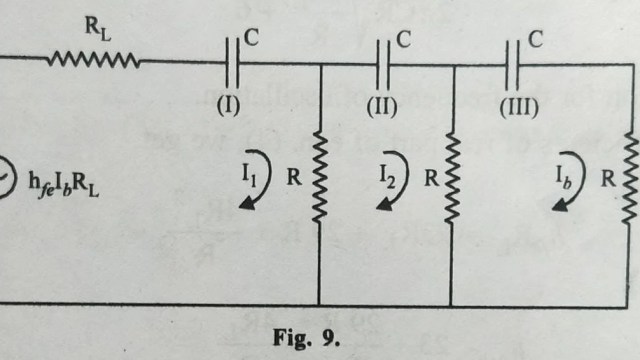
Fig. 8 shows the circuit diagram of RC phase shift oscillator using transistor in CE configuration. In this circuit, stabilized…
Quickly find equations, symbols, SI units and explanations for commonly used physics formulas.
Force equals mass times acceleration.
Energy of an object due to its motion.
Relates voltage, current and resistance.
Speed equals frequency times wavelength.